Problem Statement
Family Resource Home Care operates in the Pacific Northwest and is currently in a growth and expansion phase—opening new offices, entering new states, and onboarding new staff every week. This rapid expansion created challenges around internal organization and onboarding, particularly in helping new employees quickly find the resources they need and navigate the company’s knowledge base.
The existing knowledge base is a large SharePoint folder containing hundreds of Word documents, PDFs, images, and videos. Many of these files include operationally critical information—such as compliance checklists and procedural guidelines—that are difficult to locate without relying on long‑tenured staff, reducing efficiency and consuming valuable time.
Solution Provided
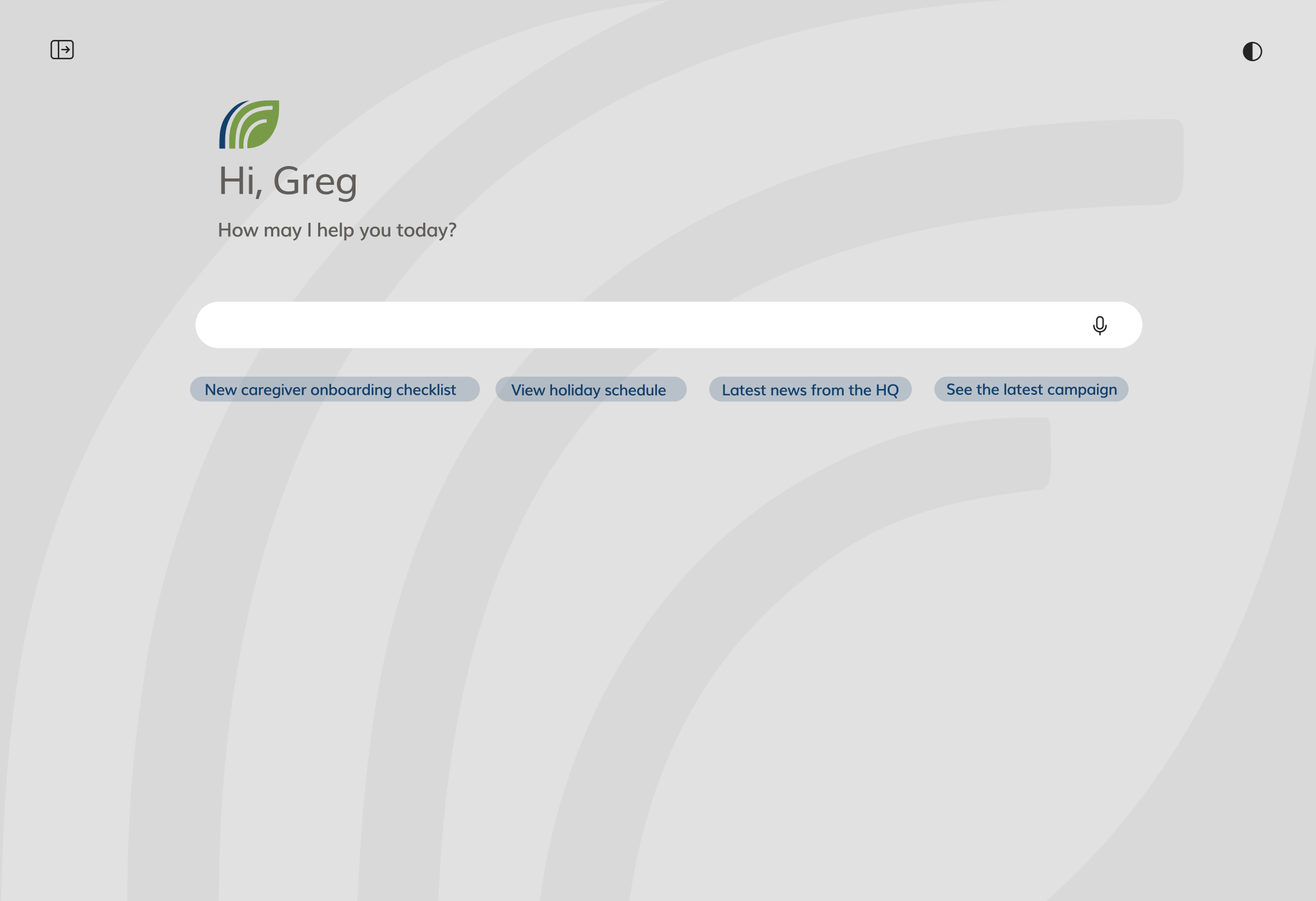
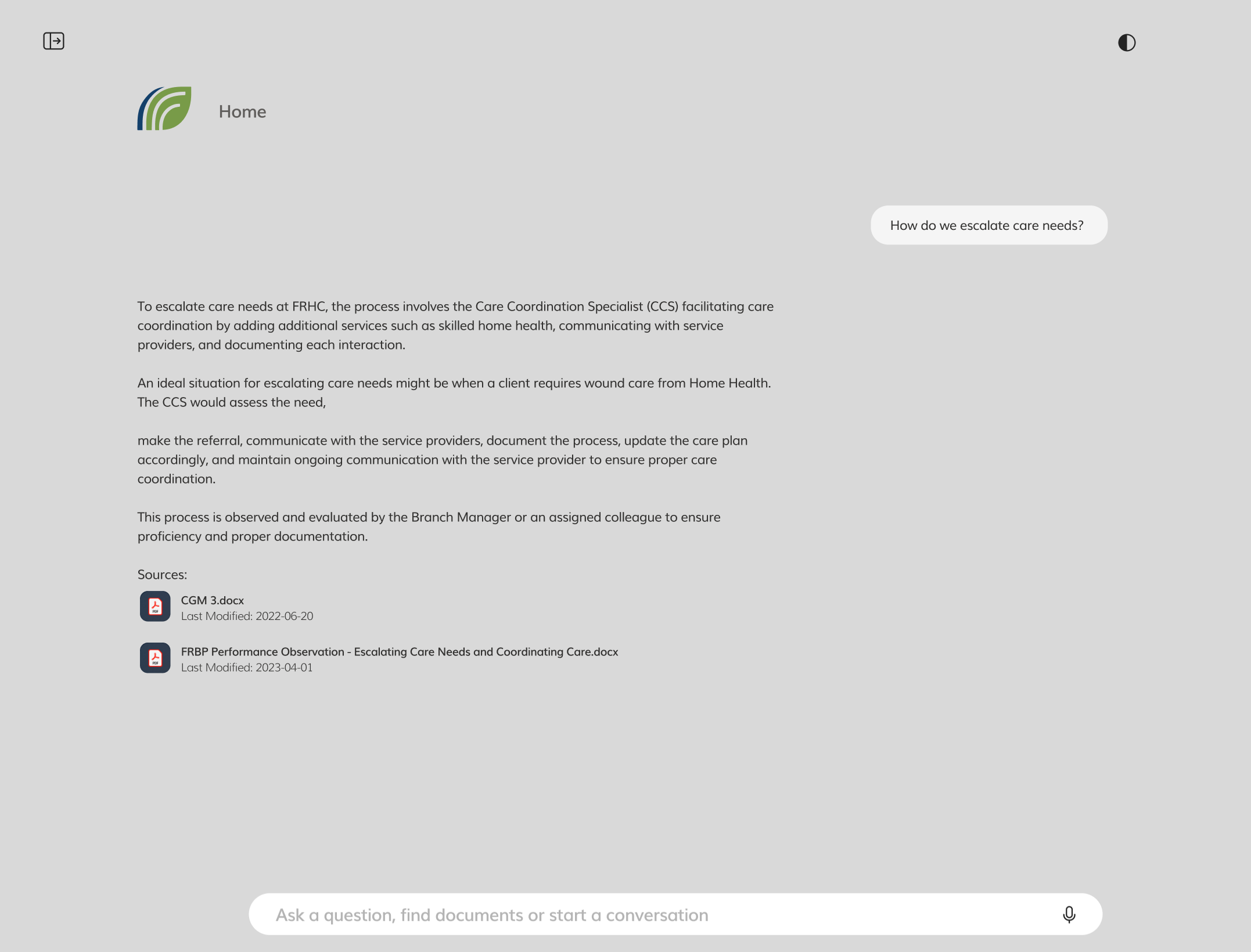
With many industries undergoing another wave of technological transformation, leveraging AI—specifically Microsoft Copilot—presented a strong opportunity. Copilot’s ability to read documents, understand context, and provide precise, cited answers made it a natural fit for improving knowledge discovery.
As the designer on the project, I conducted interviews with key stakeholder groups, including Training & Development and Branding & Marketing, to understand their daily workflows and identify where AI could reduce cognitive load and streamline tasks. Another critical focus was assessing openness to adopting this new technology, especially since many employees are not required to be tech‑savvy.
We reimagined the company intranet with a new vision shaped by the CTO, who had previously seen low adoption of traditional SharePoint sites and wanted something simpler and more intuitive. After reviewing initial design drafts with a core group, we expanded outreach to all departments—including Operations, HR, and Finance—to gather feedback and feature requests that reflected their unique needs.
Business Impact
Because Family Resource Home Care is not a technology company, involving real users early and consistently was essential for building trust and driving adoption. Continuous feedback throughout the design process helped shape the future roadmap and ensured the solution aligned with real operational needs.
Leadership support also played a major role. The evolving designs and user experience were shared across the organization during all‑hands meetings and other companywide forums, creating visibility and encouraging broader engagement. To emphasize that this was more than a traditional intranet, we introduced a new internal name—ChatFRHC—reflecting the conversational, AI‑driven experience at the heart of the solution